 Atlas
AtlasEast Natural
Fardagafoss
An East Iceland waterfall just outside Egilsstaðir, reached by a short trail and known for the cave behind the falling water and the legend of the giantess’s cauldron of gold.
- Ticket
- Free entry
- Estimated duration
- 1h
- Difficulty
- Easy
- Crowd level
- Rarely busy
Safety warning
The main risk here is not the distance but the surface: wet rock, mud and banks close to the water can quickly reduce grip. Do not treat the cavity behind the waterfall as a guaranteed passage, and do not force the final section if you encounter ice or a strong flow. Children need close supervision in the final part.
At a glance
- It is worth visiting with shoes that grip well on wet ground and enough time not to rush the final section.
- If there is a lot of water or the rock is slick, stop before the more exposed points: the view is still worthwhile.
- It works well as a short detour from Egilsstaðir or along the road towards Seyðisfjörður.
Draft
Fardagafoss is a waterfall near Egilsstaðir, at the foot of Fjarðarheiði. It is not among Iceland’s best-known names, but it has two strong qualities: a short walk and a very appealing legend.
The site
The waterfall drops into a rocky gorge and, depending on conditions, offers a glimpse of or access to the cavity opening behind the curtain of water. The standard route is marked and relatively easy, although the final section requires more care when the ground is wet.
The legend
Local tradition says that a giantess lived behind Fardagafoss with a cauldron full of gold. Before dying, she is said to have hidden the treasure in a deep cavity near Gufufoss. This story is one of the best-known legends in the Egilsstaðir area.
Content status
Basic draft entry: to be completed with dedicated images, practical details, site geology and expanded text.
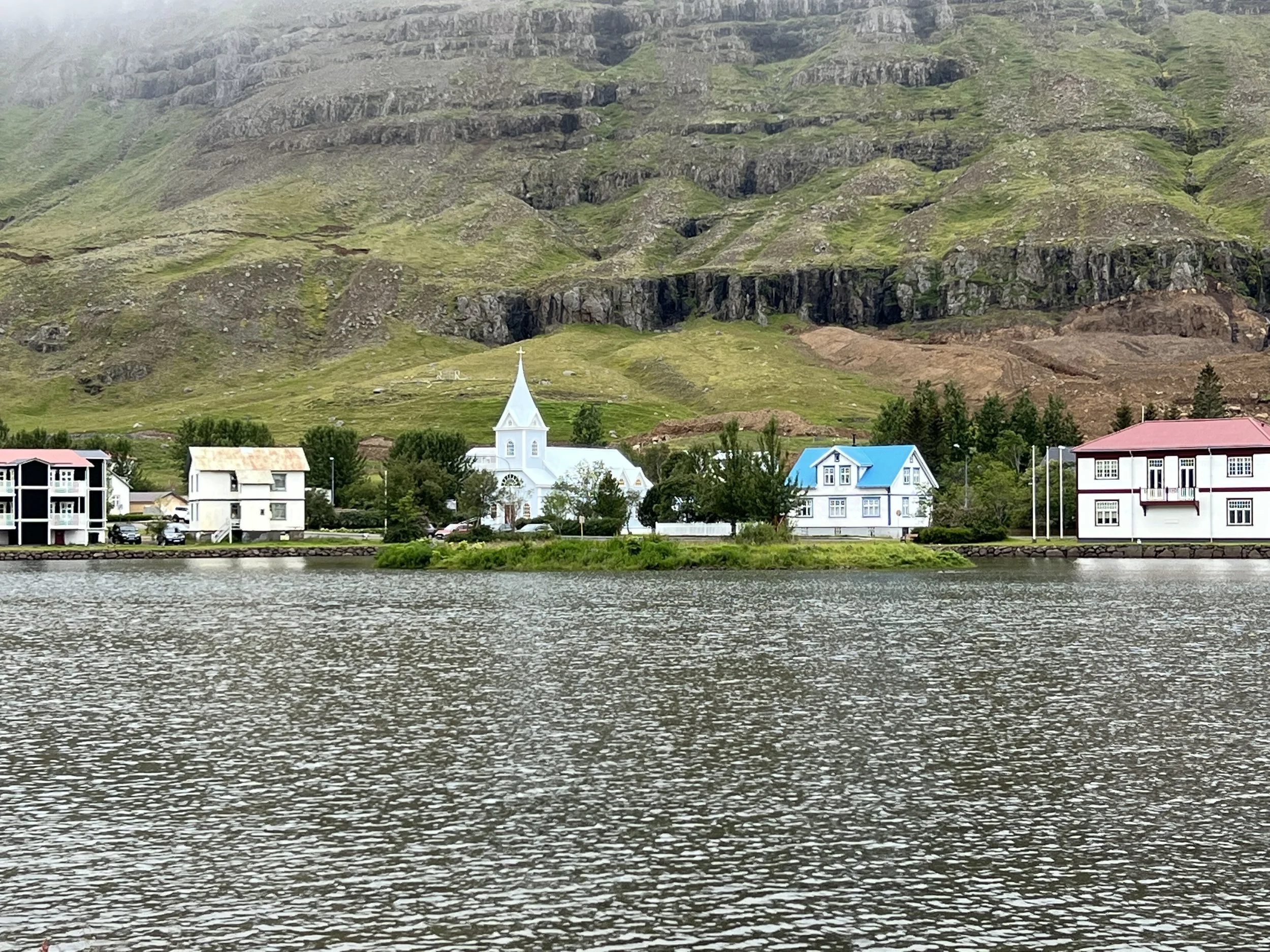
Getting there
Fardagafoss is just outside Egilsstaðir, at the foot of Fjarðarheiði. Start from the small parking area along Road 93, near Aningarsteinn, where a marked trail leads to the waterfall. The walk is short and fairly straightforward, but the final section requires more care if the ground is wet or slippery.
- Þjóðvegur 1, 701
Weather & conditions
Fardagafoss is much better when the ground is dry or at least stable. After rain, thawing conditions or during colder months, the final section can become slippery, and access behind or close to the waterfall should be assessed cautiously. In winter, snow, ice and limited daylight can greatly reduce the safety margin even on a short route.
Photography tips
The best photographs come in side light or slightly overcast conditions, when the waterfall retains detail without excessively harsh highlights. A wide-angle lens helps include the gorge and trail; a medium telephoto works better if you want to isolate the waterfall and the cavity behind the water. Bring a lens cloth: spray and moisture are easily carried near the waterfall.
Practical info
Visit planning
30 min
Minimum
60 min
Ideal
90 min
Extended
Suitable for
Opening hours
- Monday
- Aperto 24 ore su 24
- Tuesday
- Aperto 24 ore su 24
- Wednesday
- Aperto 24 ore su 24
- Thursday
- Aperto 24 ore su 24
- Friday
- Aperto 24 ore su 24
- Saturday
- Aperto 24 ore su 24
- Sunday
- Aperto 24 ore su 24
Avoid during
Services & access
- Parking
Access & rules
Terrain
Recommended gear
- Waterproof jacket
- Waterproof shoes
- Warm layers
- Hiking shoes
Traveler reviews
Updated July 7, 2026
4.6
116 reviews · Google Places
Frequently asked questions
How much time do you need to visit Fardagafoss?
Allow around 30–90 minutes for a standard visit. If you want to stop for photographs, walk at an unhurried pace or wait for better light, leave extra time rather than trying to fit everything into a quick stop.
Is there an admission fee or do you need to book?
Access appears to be free, and booking does not appear necessary for a standard visit. If you are planning far in advance or travelling out of season, it is still worth checking for any operational changes before setting off.
Are there any particular access or safety considerations?
East Iceland tourism sources describe Fardagafoss as a short walk near Egilsstaðir, with a final section that can become slippery. The cavity behind the waterfall should not be considered consistently accessible: with wet rocks, wind or ice, it is better to stop at the more stable points on the trail. Current information does not indicate full wheelchair accessibility, and pushchairs may also be limited by the surface and passages.
When is the best time to visit Fardagafoss?
It is best visited in good light and on dry ground, especially from late spring to early autumn. In winter, the area may theoretically be accessible, but trail conditions vary greatly with ice, snow and limited daylight.
Tours/activities related to Fardagafoss
Live Viator selection of bookable tours and activities connected to this attraction.
No relevant tours are available for this attraction right now.
View on Viator